
Global Health
Outbreak Alert
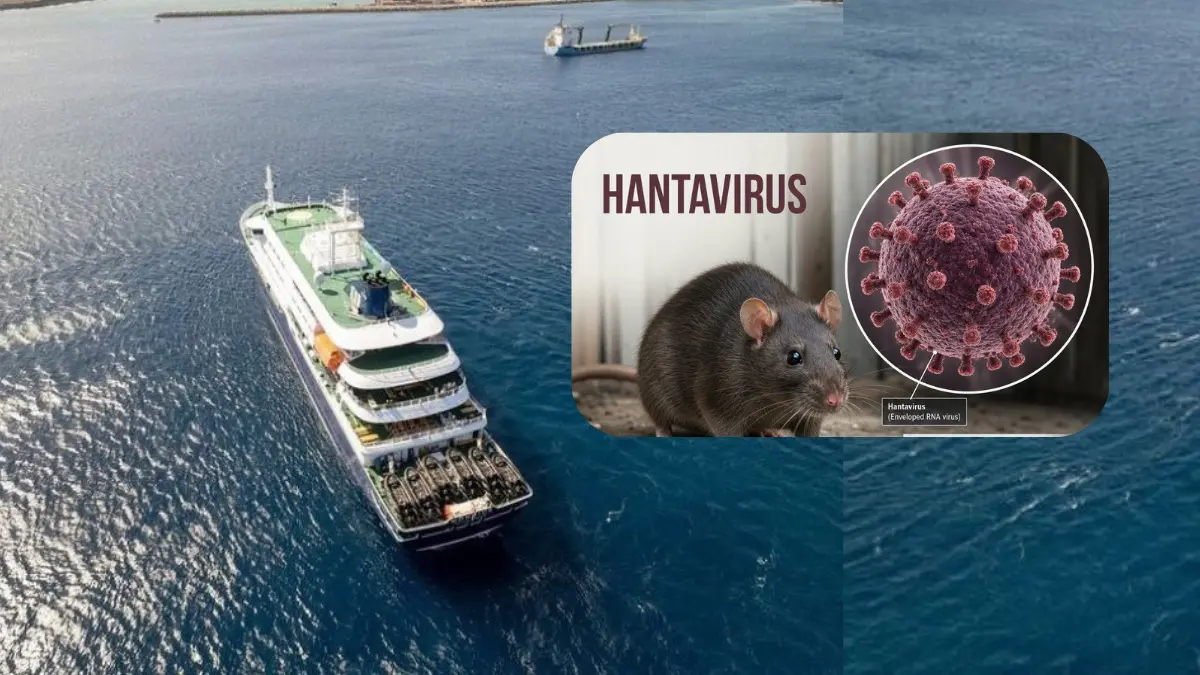
A deadly hantavirus outbreak aboard the Dutch cruise ship MV Hondius has killed three passengers and infected at least eight people across multiple countries — triggering an international health emergency and reigniting fears of a pandemic-scale containment failure.
By Bilal Saleem – SB Qureshi | LEDE Times News
May 8, 2026 | Lahore, Pakistan
In what health officials are calling an unprecedented maritime health emergency, the MV Hondius — a Dutch-flagged expedition cruise ship — has become the epicentre of a rare but deadly hantavirus outbreak that has now spread across at least four continents. As of May 8, 2026, the vessel carrying approximately 150 passengers and crew of 23 nationalities remains anchored off the coast of Praia, Cape Verde, with passengers unable to disembark, while health authorities worldwide scramble to trace and contain the virus.
The World Health Organization (WHO) confirmed five laboratory-proven cases of hantavirus linked to the ship, with eight total infections — including a man now being treated in Zurich, Switzerland, who disembarked weeks before the outbreak was publicly identified. Three people have died: a Dutch couple and a German national.
Andes Virus Alert: The strain identified is the Andes virus — the only known hantavirus capable of human-to-human transmission. While rare, this capacity makes the MV Hondius outbreak uniquely dangerous compared to typical hantavirus cases, which require direct contact with infected rodents.
What Is Hantavirus? A Rare but Lethal Threat
Hantavirus is a family of rodent-borne viruses first identified during the Korean War in the 1950s and formally classified by WHO in 1987. It primarily spreads through inhalation of aerosolized particles from the urine, faces, or saliva of infected rodents — particularly rats and mice. In the Americas, it causes Hantavirus Cardiopulmonary Syndrome (HCPS), a rapid and often fatal condition affecting the heart and lungs. In Europe and Asia, it typically causes Hemorrhagic Fever with Renal Syndrome (HFRS), primarily damaging the kidneys.
The Andes strain — linked to this outbreak — is found primarily in South America and is the only documented strain with even limited human-to-human transmission capacity, typically occurring through prolonged close contact with an infected person during the early stages of illness.
How the Outbreak Began: A Birdwatching Trip Gone Wrong
Argentine investigators believe the index case — the first infected patient — was a Dutch couple who contracted the virus while birdwatching in South America before boarding the MV Hondius. The couple had completed a four-month road trip through Chile, Uruguay, and Argentina from November 2025 to April 2026, visiting areas known to harbor the species of rat that carries the Andes strain.
The ship departed Ushuaia, Argentina — the world’s southernmost city — on April 1, 2026. On April 11, the first passenger died on board. His body was removed on April 24 at Saint Helena, where his wife also disembarked. She later deteriorated on a flight to Johannesburg and died upon arrival at a South African hospital. A third passenger — a British national — was evacuated to Johannesburg in critical condition on April 27.
By the time WHO was formally notified on May 2, passengers had already dispersed across multiple countries. Approximately 40 passengers who disembarked on April 26 are now being traced across Europe, North America, and beyond. The U.S. CDC has begun monitoring American passengers. Singapore, the Netherlands, South Africa, Spain, the United Kingdom, and Cape Verde have all activated coordinated response protocols.
Symptoms of Hantavirus: Know the Warning Signs
◉ Symptom Progression
Early-stage symptoms (1–8 weeks after exposure)
Severe headache
Muscle aches
Nausea & vomiting
Abdominal pain
Fatigue
Severe late-stage symptoms (4–10 days after onset)
Acute pneumonia
Lung fluid build-up
Cardiac failure
Respiratory distress
Shock
Medical experts warn that early symptoms of hantavirus are deceptively similar to influenza, making early diagnosis critically difficult. The danger emerges in the second phase: patients can spiral into pulmonary or cardiac failure within days. Diagnosis is confirmed through antibody blood tests or PCR-based viral genetic testing — though results can take days to weeks.
Intensity and Global Risk: How Deadly Is This Virus?
Hantavirus is not a new pathogen — but its fatality rates place it among the most lethal infectious diseases known to medicine. Old World strains (Europe and Asia) carry a fatality rate of 1–15%. But the Andes and other New World strains found in the Americas can kill up to 50% of those infected, even with treatment. In 2025 alone, eight countries in the Americas reported 229 hantavirus cases with 59 deaths — a case fatality rate of 25.7%.
What makes this outbreak uniquely alarming is not just the pathogen’s severity, but the global dispersal of potentially exposed passengers across 23 nationalities before the outbreak was even identified. The situation has drawn comparisons to the early days of the COVID-19 pandemic, when travel-linked dispersal made containment nearly impossible.
The Canary Islands’ regional president Fernando Clavijo refused to allow the MV Hondius to dock in Tenerife — a decision WHO contested, stating Spain has both a “moral and legal obligation” to assist those on board, including several Spanish citizens.
Treatment: No Cure, Only Support
There is currently no licensed antiviral drug or vaccine for hantavirus. Treatment is entirely supportive, focused on managing respiratory, cardiac, and renal complications. In severe cases, patients require Extracorporeal Membrane Oxygenation (ECMO) — a process that temporarily takes over heart and lung function. ECMO has been shown to reduce the fatality rate from 50% to approximately 20%, but it requires a fully equipped intensive care unit, limiting its availability globally.
Medical authorities caution against the use of steroids, which can disrupt the immune response critical to surviving hantavirus. Early recognition, immediate isolation, and prompt access to an ICU remain the most effective interventions available today.
● WHO Statement
WHO Director-General Dr. Tedros Adhanom Ghebreyesus briefed global media on May 7, 2026, confirming five cases and three deaths, while assessing the overall risk to the global population as “low.” WHO continues to monitor the outbreak closely and is coordinating with health authorities in Cape Verde, the Netherlands, South Africa, Spain, and the United Kingdom.
Precautions and Preventive Measures: What You Must Do
✓ Essential Precautions
Avoid all contact with rodents, their droppings, urine, or nesting materials — especially in rural, wooded, or agricultural areas.
Seal all gaps and holes in homes, storage buildings, and vehicles that may allow rodent entry.
Wear N95 masks and gloves when cleaning enclosed or poorly-ventilated spaces, old cabins, barns, or storage rooms.
If exposed to a confirmed Andes virus case, maintain physical distancing and wear an N95 mask — limited person-to-person transmission is possible.
Travelers returning from South America — especially Argentina, Chile, and Uruguay — who develop fever, muscle aches, or breathing difficulties should seek immediate medical attention and disclose their travel history.
Do not sweep or vacuum rodent droppings — use wet disinfectant methods to prevent aerosolization of virus particles.
Healthcare workers treating suspected hantavirus patients must apply standard transmission-based precautions, including airborne precautions during any aerosol-generating procedures.
Seek emergency care immediately if symptoms of acute respiratory distress appear — early ICU access significantly improves survival odds.
The Bigger Picture: Is the World Prepared?
The MV Hondius outbreak has exposed critical vulnerabilities in global health security — particularly the challenge of containing an outbreak when internationally-mobile passengers disperse across dozens of countries before a pathogen is identified. Rodent eradication protocols, improved port health screening, and faster diagnostic infrastructure are all being urgently discussed in public health circles.
While WHO maintains that the current global risk is low, the agency’s language is careful — “low” reflects the virus’s limited person-to-person transmissibility compared to respiratory viruses like influenza or COVID-19. But “low risk” does not mean “no risk.” For those directly exposed, hantavirus can be a death sentence without rapid, intensive medical intervention.
As the world watches the MV Hondius slowly make its way toward Spain’s coast — rejected by Tenerife, anchored off Cape Verde — the outbreak stands as a stark reminder: in an age of global travel, no virus stays local for long.
Keywords
Hantavirus outbreak
MV Hondius cruise ship
Andes virus
Hantavirus symptoms
Hantavirus treatment
WHO hantavirus
hantavirus precautions
hantavirus fatality rate
cruise ship disease outbreak
global health emergency 2026
rodent-borne virus

